AI agent development for real business workflows

BuildKodiq builds custom AI agents that do a specific job inside your existing systems: pull the data, decide, act, and hand anything uncertain to a person. We use LangGraph, the Anthropic Agent SDK, the OpenAI SDK and Google ADK, and deploy agents that can run in the background for hours or around the clock.

ATSjobs, candidatesCRMcontacts, dealsInboxemail, repliesDrivedocumentsAgent systemsourcescoredraftDurable queuepause, retry, resumeRun logSentry alertsHuman reviewuncertain casesDoneinterview bookedATSjobs, candidatesCRMcontacts, dealsInboxemail, repliesDrivedocumentsAgent systemsourcescoredraftDurable queuepause, retry, resumeRun logSentry alertsHuman reviewuncertain casesDoneinterview booked
How we would build it. Scroll to see each step.

Problems this solves

  • A team spends hours a day on the same research, scoring or drafting work.

    Solved by: Agent systemsource, score, draft

  • A chatbot demo worked, but it breaks on real data, long documents or multi-step tasks.

    Solved by: Durable queuepause, retry, resume

  • Work depends on several systems (ATS, CRM, inbox, drive) that don't talk to each other.

    Solved by: Connected toolsAPIs, webhooks, MCP

  • Nobody can see what the AI did, so nobody trusts it with real decisions.

    Solved by: Run log and reviewevery run logged

Use cases

Recruiting
source candidates, score them against the job description and book first-round interviews.
Legal and finance
categorise case documents, analyse bank statements and prepare recurring filings.
Investor relations
draft cited press releases, remarks and Q&A memos from source documents.
Retail operations
forecast demand, time markdowns and send a weekly briefing.
Content
write platform-specific captions and recommend posting times.

How we build it

ATSjobs, candidatesCRMcontacts, dealsInboxemail, repliesDrivedocumentsAgent systemsourcescoredraftDurable queuepause, retry, resumeRun logSentry alertsHuman reviewuncertain casesDoneinterview bookedATSjobs, candidatesCRMcontacts, dealsInboxemail, repliesDrivedocumentsAgent systemsourcescoredraftDurable queuepause, retry, resumeRun logSentry alertsHuman reviewuncertain casesDoneinterview booked
  1. Step 1: Map the job

    We write down the inputs, decisions, outputs and who reviews what, before choosing a model.

  2. Step 2: Design the agent system

    Separate agents or tools for each step (for example sourcing and scoring), with structured outputs you can audit.

  3. Step 3: Connect the systems

    APIs, webhooks and MCP servers into your ATS, CRM, inbox, storage or accounting tools.

  4. Step 4: Make it durable

    Long-running work runs on queues and durable workflows (Temporal, Inngest, GCP Cloud Run and Scheduler) so it can pause, retry and resume.

  5. Step 5: Observe and review

    Every run is logged, errors go to Sentry, and a human approval step sits wherever a mistake would cost you.

What you get

  • Working agent deployed to your cloud or ours
  • Integrations with your existing tools
  • Admin or review dashboard where needed
  • Logging, error tracking and run history
  • Handover docs and a walkthrough with your team

Handed to your team

Why BuildKodiq

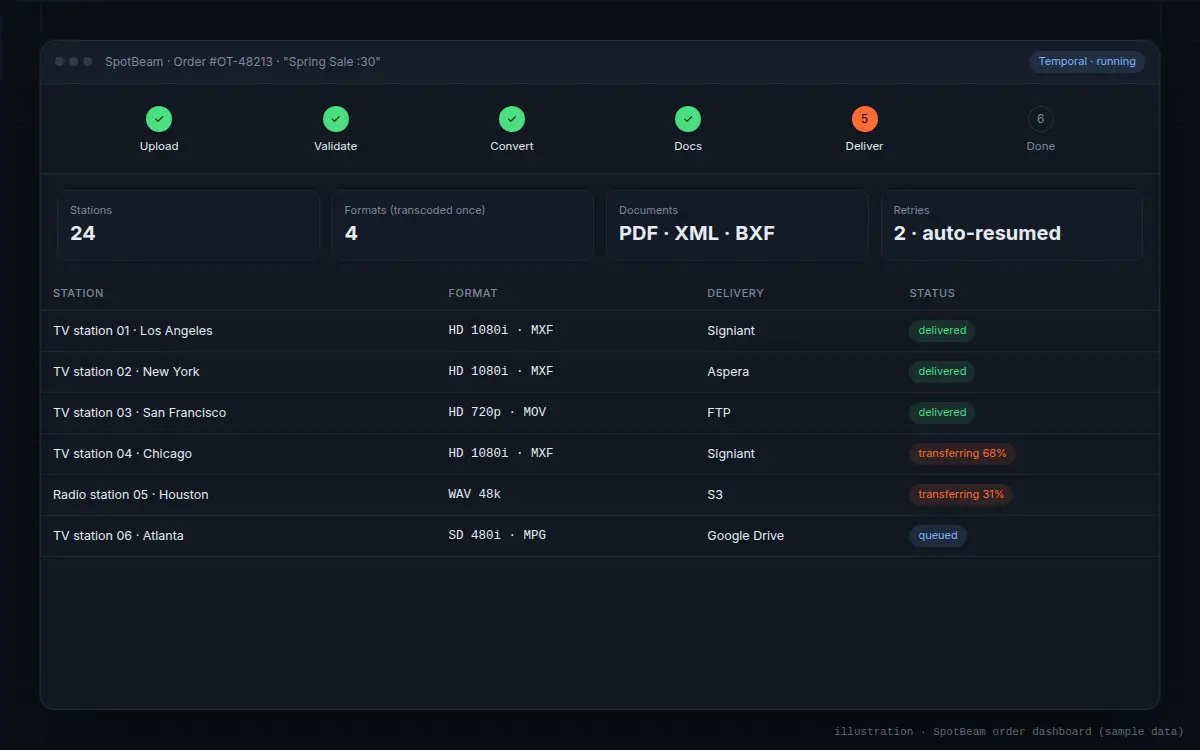
  • Agents and durable workflows already running in production for broadcast ad distribution, recruiting, bankruptcy and investor-relations teams.
  • Backend-first: queues, retries and monitoring are part of the build, not an afterthought.
  • A second engineer reviews every pull request.
LeadReviewerPreviewPRapproved
Every project has a lead engineer, and a second engineer reviews every pull request. We work US Eastern business hours and take projects directly, through Upwork or white-label through agencies.

AI agent development: common questions

What is an AI agent, compared with a chatbot?

A chatbot answers questions. An agent completes a task: it reads data, calls tools or APIs, makes decisions within rules you set, and produces a result such as a scored shortlist, a filed form or a sent email. Most of our agents also escalate to a person when they're unsure.

Which models do you use?

Claude, OpenAI and Gemini, chosen per task for accuracy, speed and cost. We keep the model behind an interface so it can be swapped later without rebuilding the agent.

Can the agent work with our existing software?

Yes. We've connected agents to JobDiva, Bill.com, QuickBooks, Plaid, Slack, Google Workspace and social platforms, through their APIs or webhooks. If a tool has an API, an agent can usually use it.

How do you stop an agent making costly mistakes?

Structured outputs, validation, logging of every step, and a human approval step wherever an error would be expensive. Agents start with narrow permissions and earn more as they prove reliable.

How much does an AI agent cost?

It depends on the number of steps, systems and how much review you need, so we quote after a free call. You get a written plan and fixed quote before any work starts.

Talk to us about AI agent development.

A free call with the engineer who would lead your project. You leave with a clear next step, whether or not we work together.

or write to hello@buildkodiq.com